
How to Search the Show Low Court Docket
First, read the court name printed on your notice or citation. That one line tells you where to search. A Show Low Police matter likely sits in the City Magistrate Court, while a county citation belongs to Show Low Justice Court, Precinct V. Felonies, large civil claims, family cases, and lower-court appeals all go to the Superior Court of Arizona in Navajo County. For a city case, the official Show Low Municipal Court page is the safest first click. Arizona Public Access covers participating courts statewide, though its exclusions still apply.
Keep the exact citation or case number close at hand. Names can mix two records; numbers rarely do. When an online result is missing or unclear, call the clerk for that specific court.
- Read the court name and appearance date on the notice or citation.
- Use the city page for a municipal matter or the Precinct V page for a county matter.
- Enter the exact case or citation number and narrow to the issuing court.
- Read the status, latest event, and next setting as separate fields.
- Confirm a changed date or request an official record from the clerk that keeps the file.
Show Low Court Docket Has Three Layers
People say "Show Low court" when they mean three different judicial paths. The city magistrate court handles city-code and traffic misdemeanor matters. Precinct V takes county limited-jurisdiction work. That means traffic, DUI, misdemeanors, protective orders, evictions, small claims, and civil disputes within the Justice Court limit. Superior Court owns the felonies, major civil cases, family and probate matters, juvenile matters, and appeals from the limited courts.
That split affects far more than where a hearing happens. Each limited court keeps its own Show Low court record. Superior Court records sit with the Clerk of the Superior Court in Navajo County. A statewide search can help you identify a court. It never merges the three offices into one. So the best first question is not "Which portal has every Show Low case?" It is "Which court filed this?"
| Show Low route | Main case scope | Record source |
|---|---|---|
| Municipal Court | City code and city traffic or misdemeanor cases | City magistrate clerk |
| Justice Court, Precinct V | County traffic, DUI, misdemeanors, small claims, and limited civil cases | Precinct V clerk |
| Superior Court | Felony, major civil, family, probate, and appeals | Superior Court Clerk in Holbrook |
The Show Low Municipal Court
The Show Low City Magistrate Court keeps the Show Low court docket for matters charged under city authority. Its official page is the right starting point for local court services. It also carries any authorized case or payment link. Vendor screens change over time. So rely on the court name and the full number on your court paper as stable identifiers. Remember that a payment screen is not the full case history and not a certified outcome.
Municipal jurisdiction has firm bounds. A county sheriff or state citation can route to Precinct V. That can happen even when the incident occurred near Show Low. Felony prosecution and major civil claims never become city cases. If the city search turns up nothing, check the issuing line on your paperwork before widening the net. Then call the city clerk rather than typing the same data into an unrelated commercial lookup.
Show Low Court Records at Ninth Place
The county page for the Show Low Justice Court shows how a Navajo County precinct entry differs from a city portal.
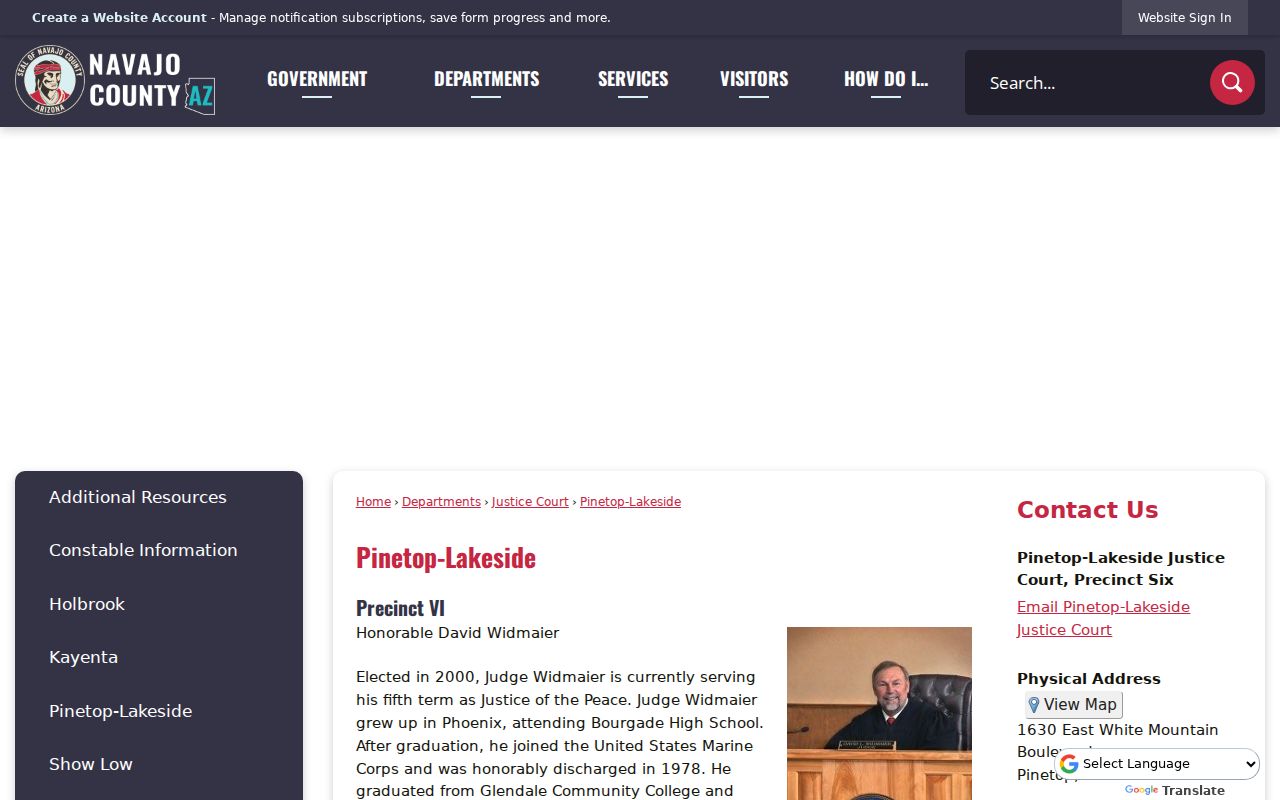
That county page places Show Low inside Navajo County's precinct structure. Precinct V and the southern Superior Court site share an address. It is 550 North 9th Place, Show Low, Arizona 85901. The Justice Court phone is 928-532-6030. The fax is 928-532-6035, and the published hours run weekdays from 8:00 a.m. to 5:00 p.m. These details describe the precinct route only, not every Show Low docket.
The shared site hides a common trap. Navajo County states plainly that the Superior Court location in Show Low has no Clerk front office. A Superior hearing may still be held there. But a certified case history or copy request goes to the Clerk's Holbrook counter. Precinct V records, in contrast, stay with the Justice Court clerk.
Show Low Court Dates and Settings
A current Show Low court date can surface on a citation, a hearing notice, a case-history event, or a court calendar. Each source does a different job. The citation gives an initial response or appearance date. Later minute entries and orders can reset it. County Superior Court calendars are split by division, commissioner, and visiting judge. So a Show Low location alone will not pick the right PDF.
Always read the newest court-issued entry, then confirm any conflict with the clerk. An old setting can linger in the history after a continuance. It stays part of the record. But it is not proof the hearing still happens then.
| Date | The scheduled day on the newest notice, order, or current calendar. |
|---|---|
| Time | The listed start time, which may be a docket call rather than an individual slot. |
| Courtroom | The city, Precinct V, or Superior Court location stated for that event. |
| Judge | The judicial officer or division tied to the current setting. |
| Setting Type | Arraignment, pretrial, motion hearing, trial, sentencing, or compliance review. |
Show Low Court Docket Search Mistakes
A paid balance does not prove the Show Low court file is closed. Payment may be just one event in the record. What that payment means for the plea or disposition depends on the charge and on notice from the court. When you need official proof, order a certified disposition from the clerk who owns the case file. The same caution applies to a page saved from the portal: handy for finding your way around, but it is not a Clerk-certified copy.
Another common docket search mistake is reading a blank statewide result as proof that no record exists. Arizona Public Access leaves out sealed matters, orders of protection, mental-health and probate cases, victim and witness data, and juvenile delinquency or incorrigibility information. Local-ordinance charges are excluded too. So a Show Low municipal matter may still call for direct contact with the court, even when the statewide docket search returns nothing.
Fast check: Match the court name before paying. “Show Low” on the incident line does not decide whether the city clerk or Precinct V holds the docket.
Show Low Traffic Tickets
Start by reading the citation itself. A Show Low traffic ticket should name the issuing court and give a response date. City citations go through the municipal route, while county cases go through Precinct V. AZCourtPay may take a notice number, case number, or citation number for participating matters, but remember it is a payment path, not a full Show Low court docket. The court clerk can confirm the current setting and the response methods open to you.
Paying and contesting are not the same choice. The court describes plea and disposition effects that payment can carry, so anyone planning to contest should follow the citation instructions before sending money. Arizona defensive driving is another option. It depends on eligibility and court approval. Nothing about it is automatic. For deadline and county routing questions, see Navajo County traffic court records.
One cost figure is published. For an eligible course beginning under the state schedule effective April 1, 2026, the court component for Show Low Justice and Show Low Municipal is $202, plus the school's own fee. Confirm the current amount and approval with the exact court before you rely on it.
Show Low Court Records Beyond Arizona
The plan also included a look at CourtListener's RECAP archive, which gathers federal PACER material and shows why jurisdiction matters.
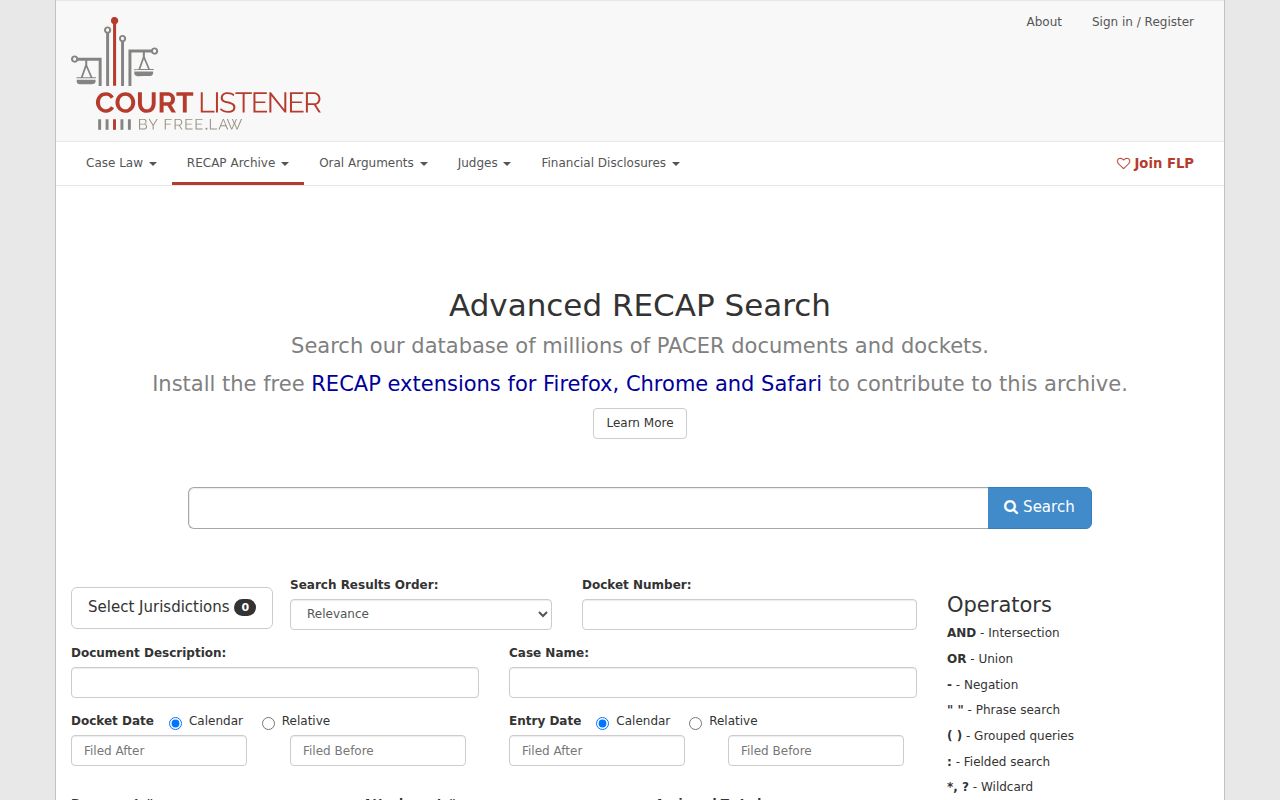
RECAP is a federal tool. It collects contributed PACER dockets and documents from federal courts. It is not the Show Low municipal search, not the Precinct V docket, and not Arizona Public Access. A local city ticket will not become a federal record just because a federal site has a docket-number field. Show Low cases live in Arizona or local court channels unless the matter was filed in the U.S. District Court for the District of Arizona.
The comparison points to a subtle search error. Labels like "docket number" do not make databases interchangeable. Identify the court system first, then use the official system that serves it.
Where Show Low Cases End Up
City-code and city traffic matters stay in Show Low Municipal Court. An authorized appeal can move them. County limited matters begin in Precinct V. A limited-court appeal can open a new Superior Court case. So track both the original court number and the receiving court's number. Felony, major civil, family, probate, and juvenile matters start at Superior Court. They never pass through the city court first.
Docket flow: Show Low Municipal Court › Navajo County limited-court appeal › Superior Court of Arizona in Navajo County
This flow describes jurisdiction, not a promise that every Show Low case climbs upward. Most local matters end where they began. When an appeal or transfer does happen, the receiving court's case history is the next record to search. The Navajo County court docket overview gives the county-level route without merging the city and precinct files.
Show Low Certified Court Dispositions
Official proof comes from the clerk who holds the file. For a municipal outcome, ask the Show Low city clerk what disposition record exists and what fee currently applies. For a Precinct V outcome, ask that Justice Court clerk. Superior Court certification comes from the Clerk of the Superior Court in Navajo County, whose front counter sits in the Holbrook governmental complex. Name the exact filing or disposition in your request and include the full case number.
An online case-history print is no substitute for certification. Public Access provides case information. Arizona eAccess can supply eligible Superior Court civil and criminal document images under its account and fee rules. Certification itself is a separate clerk act. Older Superior Court material may need the published research or microfiche route, while old city and Justice Court files remain questions for their own custodians.
- Case history
- The chronological index of filings, hearings, orders, and outcomes.
- Minute entry
- The Clerk’s written record of action taken at a Superior Court proceeding.
- Certified copy
- A reproduction authenticated by the clerk that maintains the original file.
Public Access to Show Low Court Records
Arizona's judicial-access rules govern Show Low court records. The rules are not a promise that every field appears online. Public case information can help you follow a case. It can confirm a setting or locate a filed event. Sealed records, protected identifiers, juvenile material, and other confidential categories may be withheld or redacted. Ask the proper clerk for an accessible record. A missing portal result is not a right to restricted information.
Key Rules:
Arizona Supreme Court Rule 123 governs public access to judicial records while protecting confidentiality, privacy, and court operations.
A.R.S. § 39-121 states Arizona’s general inspection principle, while Rule 123 controls judicial records.
A.R.S. § 8-208 governs access limits for juvenile court and law-enforcement records.
Custody tells you where to go. Use the city clerk for Show Low municipal records, Precinct V for its files, and the Superior Court Clerk for Superior records. That custody map is the most reliable access rule.
Show Low Court Docket Population Context
The 2020 Census counted 11,732 residents. That made Show Low the largest incorporated place in Navajo County's selected city set. The figure is community context, not a filing count. It helps explain why Show Low supports several judicial routes, yet it says nothing about how many matters each court received. Any caseload claim needs official court statistics, not population.
Size alone changes nothing for a docket search in Show Low. Even a busy hub like this city keeps no single Show Low court docket you can pull in one look. The city court, Precinct V, and Superior Court each hold their own records and handle different case types, so the docket you need depends on which one took the case.