
How to Search Criminal Dockets
The free Arizona Public Access Case Lookup is the natural first stop for a Navajo County criminal docket. It spans participating courts across the state, but it is only an index rather than a certified file. A felony belongs to Navajo County Superior Court. A misdemeanor, DUI, or traffic ticket may sit with one of the six Justice Courts or a municipal court instead. Picking the right court matters far more than the search screen you use.
Bring the full case number if you have it. Formats differ from court to court. No single pattern fits everywhere. A prefix like CR often flags a criminal matter. The complete number and issuing court printed on an official notice are the safer guides.
- Complete the Public Access CAPTCHA and choose name or case-number search.
- Narrow the result to Navajo County and the exact court when the interface permits it.
- Match the court, number, category, filing date, and status before opening the history.
- Read charges and events from oldest to newest, then locate the newest setting and outcome.
- Use eAccess for eligible images or ask the file-holding clerk for an official copy.
Navajo County Criminal Search Fields
The official Arizona case lookup source shows the statewide start screen. Pass its CAPTCHA and the live name and case-number fields appear.
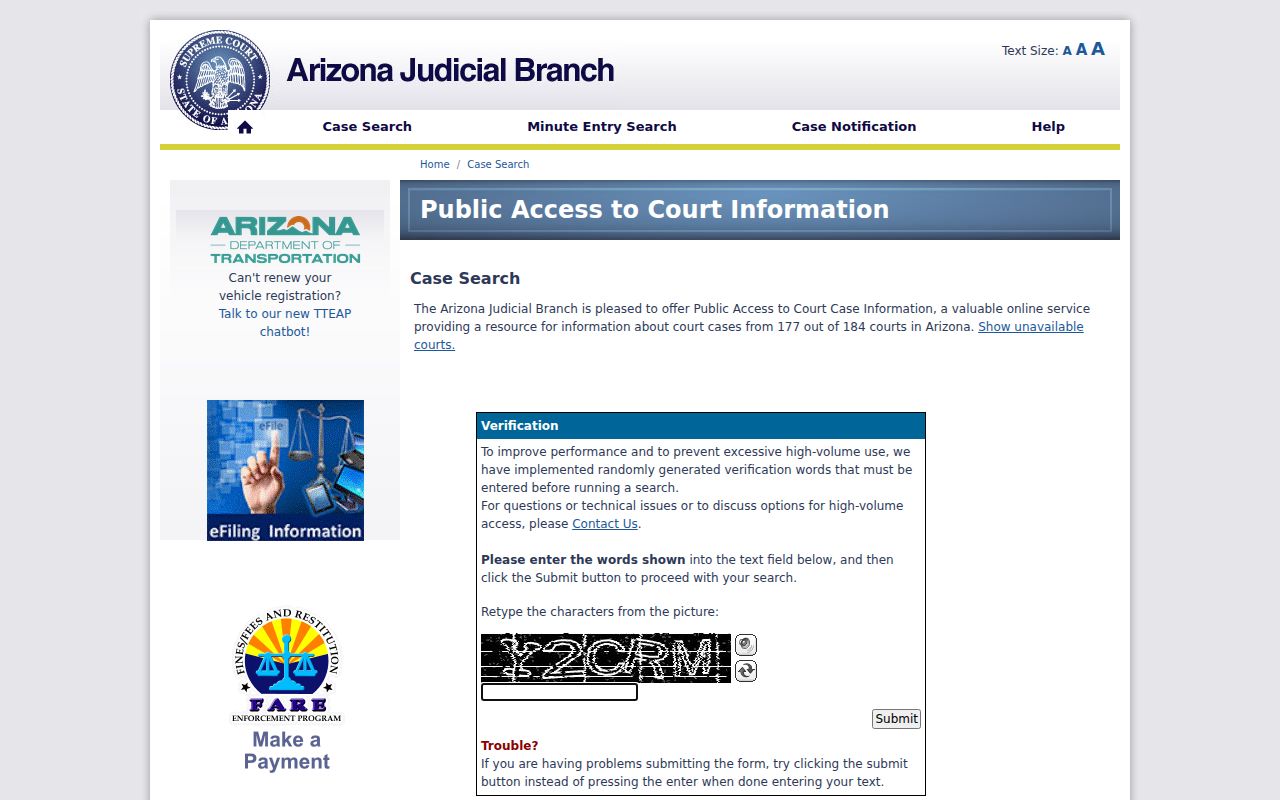
One limit matters here. A Navajo County criminal docket search passes through a statewide gate, but every result still has to be matched to the correct local court. The labels on the live screen can shift from session to session, so expect the controls to look a bit different each visit.
| Control | Type | Use |
|---|---|---|
| Picture characters | Required CAPTCHA | Passes the public entry gate |
| Name or business | Method-dependent text | Uses legal spelling; broadening may help |
| Case number | Method-dependent text | Best unique identifier when complete |
| Court or county | Optional filter | Narrows to Navajo County or a named court |
What a Criminal Docket Shows
At the top of a Navajo County criminal docket you will find the court, case number, category, filing date, and current status. The assigned division may appear too. Charge rows often list the offense and statute. They also show its classification and how each count stands. Public release entries can note bond or other release conditions. From there, the event history stitches everything together. It links filings, settings, minute entries, orders, pleas, trial events, sentencing, and later review into one timeline.
| Case Number | The full court-assigned identifier; use the exact number, not a made-up universal format. |
|---|---|
| Charges | Each count may carry its own description, class, and status. |
| Settings | Date, time, division, event type, and location when public. |
| Documents | Eligible images may be in eAccess; an entry alone is not the filed paper. |
| Disposition | The outcome for a charge or case. “Disposed” does not name one specific result. |
Money fields may show public fines, fees, restitution, or balances. Victim and witness details stay protected. For legal proof, get the actual judgment, sentencing order, or certified disposition from the right clerk.
Navajo County Criminal Docket Outcomes
Judge each count on its own. One charge can be dismissed while another ends in a plea or conviction. A warrant entry is an enforcement step, not a finding of guilt. Bond forfeiture is a bond consequence and nothing more. "Pending" tells you no final result appears. "Sentenced" means the court has set a penalty. A diversion or deferred label points to a program or delayed path. The exact terms live in the order itself.
- Disposition
- The recorded result of a charge or the case.
- Dismissed
- The charge or case ended on the terms stated in the court record.
- No contest
- A plea with court consequences, where the court permits it.
- Acquitted
- A not-guilty result after trial.
Minute entries record what the clerk noted at a proceeding. A filed motion only asks the court to act. The order that follows decides whether relief was granted.
Stages on a Criminal Docket
A Navajo County felony case often opens with a complaint, indictment, or information. Then come an initial appearance and arraignment. At arraignment the court addresses the charges, rights, and plea. Disclosure, motions, and pretrial conferences may come next. A change of plea or a trial leads to judgment and sentencing. Post-judgment motions or an appeal can add entries after the main disposition.
Docket flow: Filing → Arraignment → Pretrial → Plea or Trial → Disposition → Sentencing
Not every case uses every step. Reset notices stay in the history, and separate counts can move on different tracks.
Navajo County Criminal Docket Images
Arizona eAccess goes a step past the free case history by offering eligible filed documents. Coverage includes Superior Court civil and criminal cases filed on or after July 1, 2010. Access limits, account rules, and fees still apply. Even so, not every Navajo County criminal docket entry turns into a downloadable image there.
Older material means a request to the Clerk of the Superior Court in Navajo County. The Clerk takes the county form by email, mail, fax, or at the Holbrook counter. Research or microfiche work carries a published $35 charge. That charge applies only when the option fits. A certified copy is not a portal printout.
Note: The county posts no single guaranteed processing time. Ask the Records Department when timing matters.
Which Court Holds Criminal Dockets
The Superior Court of Arizona in Navajo County holds the felony dockets. The Clerk of the Superior Court in Navajo County keeps those files. It also keeps limited-jurisdiction appeal records. Six Justice Courts handle DUI, misdemeanor, traffic, and other cases within their authority. Municipal courts keep city-code matters, mostly misdemeanors and traffic cases from inside city limits.
Do not route every request to the Holbrook clerk. Holbrook I, Winslow II, Snowflake III, Kayenta IV, Show Low V, and Pinetop-Lakeside VI are the six. Each keeps its own Justice Court records. And a case heard at the Show Low Superior Court location still requires a records request through Holbrook. Show Low has no Clerk front counter.
| Case level | Likely docket custodian | Best fallback |
|---|---|---|
| Felony | Superior Court Clerk | Holbrook records channel |
| County misdemeanor or DUI | Issuing Justice Court | Exact precinct clerk |
| City offense | Municipal court | City court clerk |
Navajo County Drug Court Dockets
The Navajo County Adult Drug Court runs sessions in Holbrook and Show Low. It is voluntary. A treatment team works with eligible participants. The model replaces the ordinary punitive path, and the Arizona drug-court program source lays it out in full. For public filings, though, the docket to watch is the underlying criminal or probation case. Navajo County posts no separate drug-court docket.
That gap makes sense once you know what stays private. Treatment material never enters a public court docket. Even a review hearing or probation event can appear there. The two records serve different roles entirely, so expect the docket to show events only.
Missing Navajo County Criminal Records
When a filing does not show up, work through the likely causes. eAccess may simply not cover that filing date. The document may not be digitized, or access to it may be restricted. Public Access refreshes weekly, every Friday, carrying data through Wednesday. A brand-new event can lag. Check your spelling, filters, case number, and court assignment. Only then decide a Navajo County record is truly gone.
If the case sits in Superior Court, call the Clerk at 928-524-4188. You can also send the records form to navajorecords@courts.az.gov. Mail goes to P.O. Box 668, Holbrook, AZ 86025. The Records Department fax is 928-524-4261. Limited-court cases stay with that court's own clerk.
Navajo County Criminal Set-Aside Dockets
Arizona law treats these as two different things: setting aside a conviction and sealing the case record. The official setting-aside source walks through that first route.
A set-aside entry does not seal anything. That is the key point for anyone reading a Navajo County criminal docket. Check the signed order and the case history, because a public access result can stay visible even after relief that does not restrict the record.
Navajo County Criminal Record Sealing
The Arizona criminal record sealing page provides current forms and procedural help.
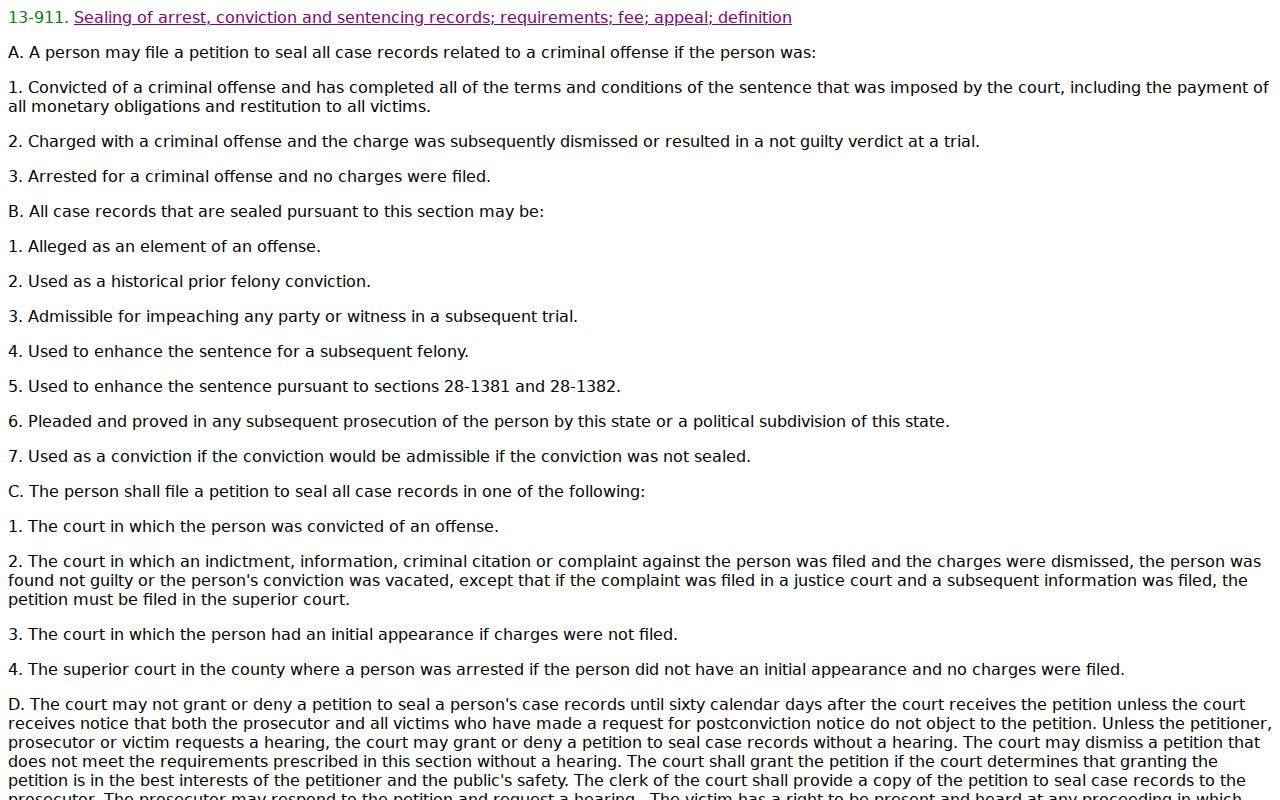
A sealing petition goes to the court tied to the case. Statute and the court's own order control eligibility. They also set waiting periods, exclusions, and who keeps authorized access. The Navajo County sources name no filing fee. Do not assume one. You can read the statute itself in the A.R.S. section 13-911 source.
One thing deserves emphasis. Sealing is legal relief granted by a court, not a switch on a docket search screen. Courts and the agencies listed by law may still reach the record after ordinary public access closes.
Navajo County Criminal Docket Privacy
Statewide Public Access never shows victim or witness data. Protected personal identifiers can also be redacted from filings that are otherwise public. The clerk did not lose the case. The gap reflects a line between public court events and details Arizona law or a court order shields.
Juvenile delinquency and incorrigibility matters are excluded too. Some other cases involving a juvenile, such as traffic matters, may still appear. A blank result tells you nothing by itself. It says nothing about a person's role, age, or case status in a Navajo County docket search. The clerk can explain the lawful request route without disclosing protected facts.
Public Access and Sealed Criminal Dockets
Rule 123 of the Arizona Supreme Court governs judicial records statewide. It weighs public access against confidentiality, privacy, and the daily work of the courts. Statewide Public Access leaves out sealed matters. Orders of protection, mental-health and probate cases, protected victim and witness information, and juvenile delinquency or incorrigibility information are excluded too. A blank result is not a key. It gives you no right to inspect a protected Navajo County criminal docket. The Arizona court rules source documents that process.
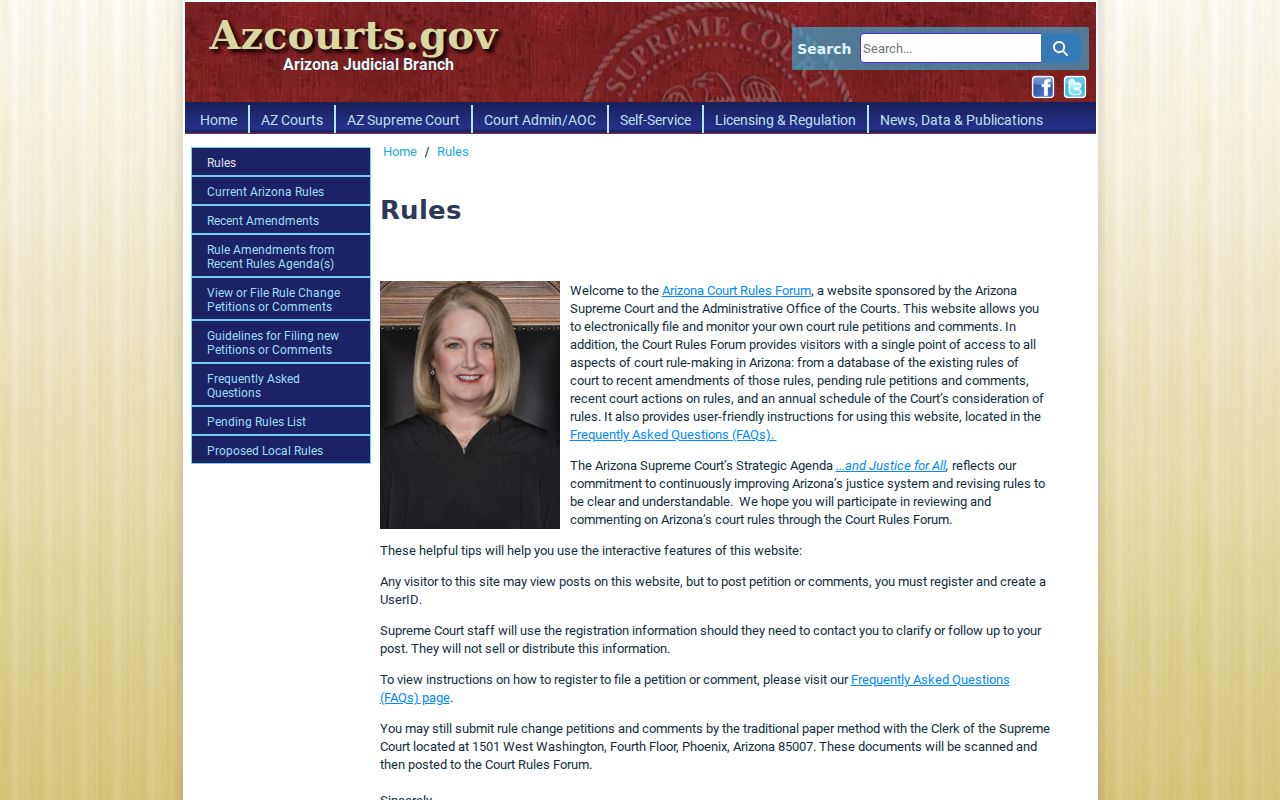
That rules material points you back to the official court. An authorized person should use the lawful clerk route rather than guess at protected facts from a no-result screen.
Key Rules:
Arizona Supreme Court Rule 123 governs public access to judicial records.
A.R.S. section 8-208 limits access to protected juvenile records.
A.R.S. section 13-911 sets the process and limits for qualifying criminal record sealing.